Reviewing Pet Care Vector Banners for Stitching
As a designer who spends half my life digitizing artwork and the other half staring at hoop marks on fabric, I have learned to look at Pet Care 2D Vector Web Banner Set with a critical eye. Most people see these files as ready-to-print web elements or poster graphics. I see them as potential embroidery challenges and opportunities. When you are running a craft business or selling handmade products on Etsy, the line between a digital graphic and a stitched reality is thin. One wrong assumption about stitch density or detail level can ruin a batch of custom apparel.
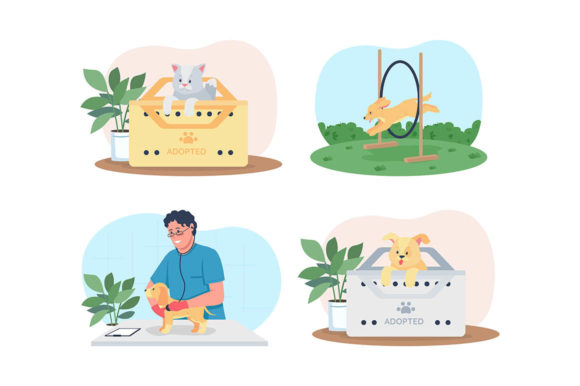
I recently pulled this collection from my library of Graphic Templates to evaluate its viability for a local veterinary clinic’s promotional merchandise. The client wanted branded tote bags and staff sweatshirts. The source material is described as a pet care 2D vector web banner and poster set featuring training and medical care themes. It includes veterinarian doctors, dogs as flat characters on cartoon backgrounds, and even a cat in an adoption box suitable for a printable patch. My job was to determine if these colorful web elements could translate into durable, professional machine embroidery design assets.
First Impressions: Mood and Visual Personality
The immediate mood of this set is approachable, clean, and friendly. The flat character style is popular in modern web design because it reads well on small screens. For embroidery, this is a double-edged sword. Flat designs often rely on solid blocks of color and clean lines, which can translate beautifully into fill stitch and satin stitch work if handled correctly. However, the "cartoon background" aspect mentioned in the description raises a red flag. Backgrounds in embroidery are rarely successful unless they are simplified drastically. Stitching a full background eats up thread, time, and stabilizer, often resulting in a stiff, puckered finished product.
The visual personality here is playful. The veterinarian characters and dogs are designed to be recognizable at a glance. This is crucial for embroidered patch projects or small logos on caps. If the details are too fine, they get lost in the texture of the fabric. If they are too bold, they look heavy. This set seems to strike a balance that favors clarity, which is exactly what you want for a small shop product that needs to be identifiable from across a craft fair table.
Real-World Application: From Screen to Sweatshirt
Let’s talk about a real scenario. I decided to test the veterinarian dog character for a custom sweatshirt embroidery project. The goal was to create a comforting, professional look for vet techs. Because the original asset is a Graphics file intended for web use, it does not come as a pre-digitized embroidery file. This means the designer must manually convert the vector paths into stitch types.
For the sweatshirt, I isolated the main character from the cartoon background. This is a non-negotiable step. Trying to stitch the entire banner would be a disaster on a textured fleece. By focusing on the flat character, I could utilize a dense fill stitch for the body and a tight satin stitch for the outlines. The result was crisp and professional. The thread colors from the original vector palette translated well, though I had to adjust the brightness slightly because embroidery thread has a sheen that flat digital colors lack.
I also considered using the "cat in adoption box" element for a tote bag design. Tote bags are usually made of canvas or cotton, which handles stitching well. Here, the box shape provides a natural frame, making it an ideal candidate for an applique design. Instead of stitching the entire box in fill, you could cut fabric to shape and use a running stitch or satin border to secure it. This reduces stitch density, keeps the bag flexible, and adds a nice textural contrast. It turns a simple web element into a high-value personalized gift or boutique item.
Navigating Technical Constraints
While the aesthetic is strong, there are areas where Pet Care 2D Vector Web Banner Set requires careful handling. The description mentions "tiny lettering" implicitly through the nature of web banners, which often include taglines or small text. In embroidery, small text is the enemy of durability. If you plan to use any text elements from this set on custom apparel that will be washed frequently, you must ensure the font size is large enough to support the stitches. Otherwise, the threads will break or merge into an illegible blob.
Another concern is the hoop size. Web banners are often wide and horizontal. Embroidery hoops are limited. You may need to split the design or, more likely, crop it significantly. For a cap or hat, the curved surface makes wide designs difficult to stitch without distortion. I would recommend using only the central character icons for headwear, avoiding the wider banner layouts entirely. Similarly, on stretchy fabrics like jersey knits for baby clothes, a heavy design can cause pulling. Always use a proper stabilizer—cut-away for knits, tear-away for wovens—to maintain the integrity of the embroidery project.
Dark fabrics present another challenge. The vibrant, colorful nature of this set assumes a light or white background. If you are stitching on a navy or black tote bag, you cannot rely on the background color of the fabric to complete the image. You must stitch the background elements or use applique fabric to create contrast. Failing to do so will make the design look incomplete and amateurish.
Enhancing Brand Value and Customer Trust
Why go through this trouble? Because a well-executed embroidery design elevates perceived value. A generic printed logo on a shirt is forgettable. An embroidered veterinarian character on a high-quality hoodie signals craftsmanship. For Etsy sellers and creative entrepreneurs, this distinction is vital. It builds customer trust and justifies a higher price point.
When you use assets like Pet Care 2D Vector Web Banner Set thoughtfully, you create consistency. If you are branding a pet care business, using the same character styles across your website (as web banners) and your physical merchandise (as embroidery) creates a cohesive brand identity. This recognition helps with buyer engagement. Customers remember the cute dog on the website, and when they see it stitched on a kitchen towel or pillow cover, the connection is instant.
Practical Designer Notes for Execution
Before you commit to production, follow these steps to ensure success with this collection:
- Test on scrap fabric first. Never stitch directly on your final garment. Check how the fabric texture interacts with the stitches.
- Check thread color contrast. View your design in black and white mockups to ensure the shapes are distinct without relying on color.
- Review stitch density. If digitizing from the vector, reduce fill density for larger areas to prevent stiffness and puckering.
- Confirm hoop size. Ensure your machine can accommodate the dimensions of the isolated elements you choose to use.
- Inspect small details. Simplify tiny features like eyes or whiskers. Sometimes less detail reads better in thread.
- Verify licensing. Since this is a set of Graphic Templates, confirm whether the license allows for commercial use of derived physical products. Do not assume that buying a graphic grants unlimited rights for commercial embroidery sales.
In conclusion, Pet Care 2D Vector Web Banner Set is a versatile resource, but it is not a plug-and-play solution for embroidery. It requires a designer’s touch to translate flat vectors into tactile art. By isolating key characters, respecting fabric limitations, and prioritizing stitch quality over complex backgrounds, you can turn these digital assets into stunning handmade products. Whether for a holiday gift, a baby embroidery item, or professional clinic wear, the potential is there—if you respect the medium.