Clinical Trials Icons: Graphics & Templates
As a digital publisher who has spent over a decade refining the visual language of high-traffic blogs and editorial platforms, I have learned that trust is not just built through words. It is constructed pixel by pixel. When I first opened the Clinical Trials Concept Icons Set, my immediate reaction was one of relief. In the health and wellness niche, finding graphic design assets that strike the perfect balance between scientific authority and approachable modernity is notoriously difficult. Too often, medical imagery leans heavily into sterile, cold aesthetics or, conversely, overly playful cartoons that undermine credibility. This collection, however, lands squarely in the sweet spot of professional clarity.
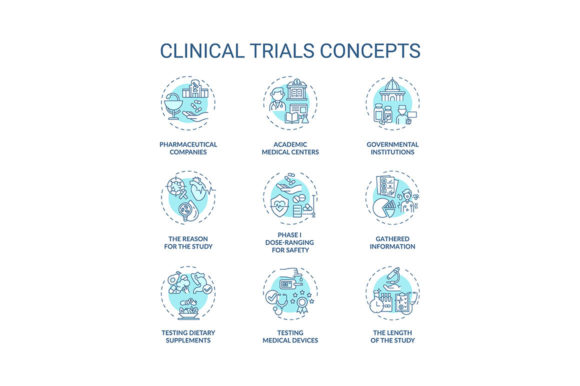
The set features thin line RGB color illustrations that evoke the precision of academic medical centers while maintaining the lightness required for engaging web content. For bloggers and content creators covering topics like dietary supplement testing, pharmaceutical research, or patient advocacy, these vector isolated outline drawings offer a versatile foundation. The editable stroke feature is particularly crucial for us as designers, allowing us to tweak line weights to match our specific brand guidelines without losing resolution. It feels less like a generic stock purchase and more like a bespoke component of a larger brand identity system.
Elevating Editorial Design with Precision
In real-world publishing workflows, the application of this asset extends far beyond simple decoration. I recently integrated these icons into a series of long-form guides on clinical study participation. The goal was to break down complex regulatory processes into digestible visual chunks. Here, the Clinical Trials Concept Icons Set proved invaluable for establishing a clear visual hierarchy. By pairing these clean, linear graphics with bold sans-serif headers, we created a reading experience that felt organized and authoritative.
For website owners and affiliate marketers, the versatility of these Graphic Templates is a major selling point. They are not confined to a single use case. I have successfully deployed them across various touchpoints:
- Blog Featured Images: Using the icons as central focal points against soft, neutral backgrounds creates clickable, professional thumbnails that stand out in archive pages.
- Pinterest Pins: The vertical nature of many pin designs benefits from the scalable vector quality. These icons remain crisp even when stretched to fit tall formats, driving higher click-through rates from social platforms.
- Newsletter Graphics: In email marketing, where load times and file sizes matter, using these lightweight vectors ensures your newsletter headers look sharp without bloating the email payload.
- Digital Guides and eBooks: When compiling information into a digital download or lead magnet, consistency is key. These icons provide a cohesive visual thread that ties chapters together, enhancing the perceived value of the paid or free resource.
Strategic Placement for Maximum Impact
Understanding where to place these design assets is just as important as owning them. In my experience, they work best in hero images and article headers where they can breathe. The thin lines require adequate white space to be appreciated. When used in a website header or as an accent in a sidebar, they reinforce the theme of medical rigor without overwhelming the text. They are particularly effective for content marketing campaigns that need to explain abstract concepts, such as the phases of a clinical trial or the methodology behind testing dietary supplements.
However, caution is advised in certain contexts. Because the style relies on delicate lines, these icons can get lost in small mobile thumbnails if the background is busy or low-contrast. I recommend avoiding their use in cluttered layouts or on top of photographic backgrounds without a solid color overlay. Furthermore, for extremely corporate or serious legal documents, you might want to test if the RGB color palette aligns with your strict brand guidelines, though the editable nature of the files usually allows for easy adjustment to monochrome or brand-specific hues.
Technical Considerations for Publishers
From a technical standpoint, integrating this digital product into your workflow requires a few best practices. First, always test the icons on both desktop and mobile screens. What looks elegant on a 27-inch monitor might disappear on a smartphone if the stroke width is too thin. I often create a duplicate layer with a slightly heavier stroke for mobile-specific views to ensure visibility.
Second, consider typography pairings. These icons pair beautifully with modern sans-serif fonts, reinforcing a clean, contemporary look. However, they also create an interesting contrast when placed beside serif fonts, adding a touch of traditional academic weight to the design. If you are building a Canva template for clients or internal use, ensure you lock the aspect ratio of these vectors to prevent distortion.
Performance is another critical factor. While vectors are inherently lightweight, ensure you are exporting them in the correct format for web use, such as SVG for scalability or compressed PNGs for broader compatibility. Always check the commercial licensing terms before using these Graphics on monetized websites, affiliate pages, or in products you intend to sell. Confirming that you have the right commercial license protects your business and ensures you can use these assets confidently in your small business branding efforts.
Building Trust Through Visual Consistency
Ultimately, the value of the Clinical Trials Concept Icons Set lies in its ability to humanize complex medical data. For online educators and health coaches, these illustrations serve as a bridge between dense scientific information and reader understanding. They signal to the audience that the content is well-researched and professionally presented. In the crowded creative marketplace of digital content, having access to high-quality, niche-specific printable design elements can be the differentiator that turns a casual visitor into a loyal subscriber.
Whether you are designing a social media graphics campaign to raise awareness about medical studies or creating a comprehensive digital guide for patients, this set offers the flexibility and polish needed for modern web design. It supports a narrative of transparency and education, which is essential for building long-term reader trust. By incorporating these editable, high-resolution assets into your editorial design toolkit, you elevate the perceived quality of your entire publication. It is not just about making things look pretty; it is about communicating competence and care through every visual element on the page.